
Can you get a business loan with bad credit?
If you've been turned down for a business loan because of your credit history, you might assume that's the end of the road. It isn't necessarily.

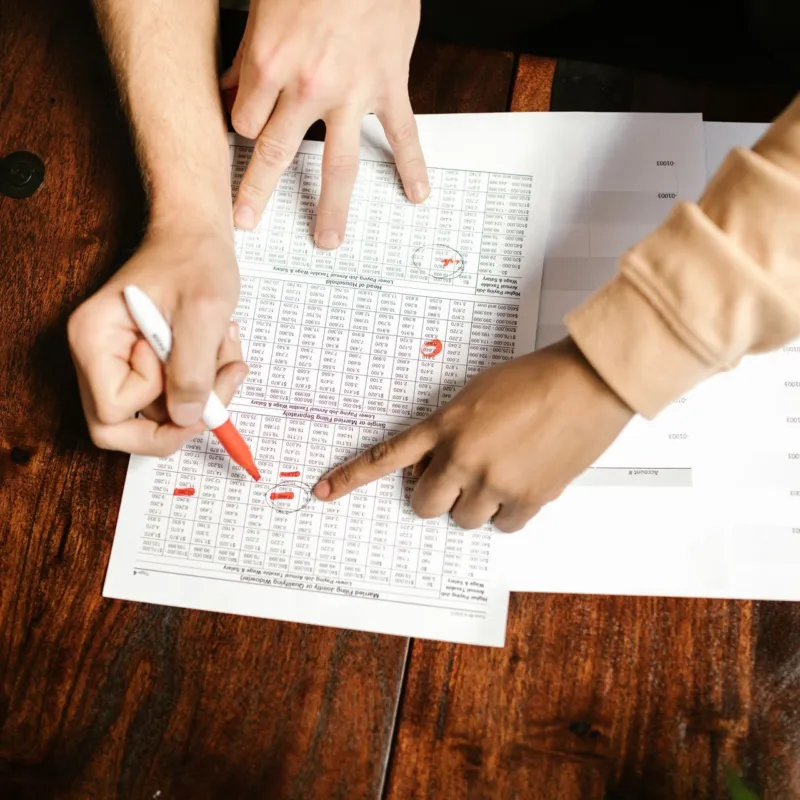
Poor credit can make accessing business finance more difficult, but not every credit issue is treated in the same way. Some circumstances will prevent an application from progressing, while other historic or resolved issues may be considered as part of a wider assessment.
At BEF, active CCJs, bankruptcy and IVAs are a hard stop for lending. If a CCJ has been satisfied, we can review the application, but we'll want to understand the circumstances behind it and ask questions about any other poor credit issues.
So, if you're looking for a business loan with bad credit, the important question isn't simply whether you have a poor credit history.
It's what happened, whether the issue has been resolved and what the wider picture of your business looks like.
Can you get a business loan with bad credit?
It may be possible, depending on the nature of the credit issue, the lender and your wider circumstances.
A lender may consider:
- Your credit history
- Your business's trading history
- Financial performance
- Cash flow
- Existing borrowing
- Your business plan
- Financial forecasts
- The purpose of the borrowing
- Whether the repayments are affordable
- Available security
The British Business Bank explains that lenders will generally carry out a credit check before offering finance and deciding on the terms. But a credit score isn't the only thing a lender needs to understand.
The bigger question is: Can the business support the proposed borrowing and repay it?
That's why your current financial position, trading history, cash flow and affordability can all matter alongside your credit history.
What counts as bad credit?
There's no single definition of "bad credit" that applies to every lender. Your credit history provides a record of how you've managed previous borrowing and financial commitments.
Issues that can affect your credit history include:
- Missed payments
- Defaults
- County Court Judgments (CCJs)
- High levels of existing borrowing
- Insolvency
- Other financial difficulties
The significance of an issue can depend on what happened, when it happened and whether it has since been resolved. This distinction is important when you're considering business finance. A historic credit issue that has been resolved is not necessarily treated in the same way as an active financial issue.
Does bad credit stop you getting a business loan?
Not necessarily. But the type of credit issue, whether it has been resolved and the circumstances behind it can all be important.
At BEF, active CCJs, bankruptcy and IVAs are a hard stop for lending.
If a CCJ has been satisfied, we can review the application. We will want to understand the circumstances behind the CCJ, why it occurred, when it was satisfied and whether there have been any further credit issues.
The same principle applies to other adverse credit history.
We won't simply look at a credit score and make a decision based on that number alone. We will ask questions about any poor credit issues so that we can understand the circumstances and consider them alongside the wider application.
Other factors can include:
- Your trading history
- Business performance
- Cash flow
- Existing borrowing
- Your business plan
- Financial forecasts
- The purpose of the borrowing
- Whether the proposed repayments are affordable
So the answer isn't simply "yes" or "no".
It depends on the circumstances and the overall strength and affordability of the application.
Why do lenders care about your credit history?
Lenders want to understand the risk involved in providing finance. Your credit history provides information about how previous financial commitments have been managed.
A poor credit history can therefore indicate a higher level of risk. But a lender also needs to understand your current position.
For example:
Is the business trading successfully?
Your trading history can provide evidence of the business's ability to generate income.
Can the business afford the repayments?
A lender needs to understand whether the proposed borrowing is affordable.
Why does the business need the money?
The purpose of the borrowing matters. A clear and realistic reason for borrowing can help a lender understand the application.
What happened with your credit history?
A historic and resolved financial difficulty may be considered differently from an active issue, depending on the lender's criteria. This is why your credit history should be considered as part of the wider picture.
The British Business Bank notes that lenders look at business creditworthiness and financial information when assessing finance applications.
Business credit scores and personal credit scores
The type of business you operate can affect which credit information a lender considers. For a limited company, lenders can check the company's business credit history.
For sole traders and some partnerships, lenders may use personal credit information because the individual and business are not separate legal entities in the same way as a limited company.
The British Business Bank explains that lenders will generally run a credit check on the business, or on the individual where appropriate for sole traders or partnerships.
If you're unsure about your credit position, it can be useful to check the information held about you or your business before applying for finance. This gives you the opportunity to identify errors and understand any issues that a lender may see.
What if you have a CCJ?
A CCJ, or County Court Judgment, can affect your ability to access finance. However, there is an important distinction between an active CCJ and a satisfied CCJ.
At BEF, an active CCJ is a hard stop for lending. A satisfied CCJ can be reviewed as part of an application.
If you have a satisfied CCJ, we will want to understand:
- What caused the CCJ
- When it occurred
- When it was satisfied
- Why the payment was missed or delayed
- Whether there have been any other credit issues
- Your current financial position
The purpose isn't simply to find a reason to reject an application. We need to understand the circumstances and assess the application as a whole.
If you have a CCJ, make sure you know whether it is active or satisfied before considering an application.
What if you've been bankrupt or have an IVA?
At BEF, bankruptcy and IVAs are a hard stop for lending.
This means we cannot lend where an applicant is currently bankrupt or has an active IVA.
If either applies to you, our finance options won't be suitable while that circumstance remains in place.
If your financial circumstances have changed since a previous period of financial difficulty, it may be worth seeking appropriate professional advice about your options before applying for business finance.
Why was my business loan application rejected?
If you've already been turned down, the first thing to establish is why. A poor credit rating is one possible reason for a business loan application being rejected, but it isn't the only one.
The British Business Bank identifies several possible reasons for rejection, including:
- A low credit rating
- Insufficient security
- A weak business plan
- Weak financial forecasts or cash flow
- A lender having a low risk appetite for your particular sector
This distinction matters. If your application was rejected because of a specific weakness, addressing that weakness may improve your position. But the rejection could also reflect the lender's own criteria or appetite for risk.
High street banks have different lending criteria, so a rejection from one bank doesn't necessarily mean another lender will reach the same decision.
What can you do if you have bad credit?
If your credit history is making it difficult to access finance, there are several things you can do.
Understand your credit history
Find out what issues may affect your application. If information is incorrect, investigate how it can be corrected. If the information is accurate, understanding what happened means you can provide a clear explanation if a lender asks about it.
Make sure your current finances are in order
Lenders may look at your current financial position as well as your credit history. Make sure your accounts, cash flow information and financial forecasts are up to date.
The British Business Bank notes that lenders often pay close attention to current financial information when assessing a business.
Be clear about why you need the finance
Explain exactly what the money will be used for.
For example, are you:
- Buying equipment?
- Funding stock?
- Supporting working capital?
- Investing in growth?
- Refinancing existing borrowing?
The clearer you are about the purpose of the finance, the easier it is for a lender to understand the application.
Make sure the borrowing is affordable
Don't apply for more than your business can reasonably afford to repay. Consider your existing commitments and what would happen if your income was lower than forecast.
Consider different lenders
If your bank has rejected you, don't automatically assume there are no other options. Different lenders have different criteria.
Specialist lenders, including CDFIs, may consider businesses that don't meet the criteria of traditional banks.
Can a CDFI help if you have bad credit?
A Community Development Finance Institution, or CDFI, is a non-profit lender that provides finance using a relationship-focused approach.
This can be particularly relevant if you've struggled to access finance through traditional lenders.
The British Business Bank explains that CDFIs can look beyond a weak balance sheet or poor credit history and consider the fundamentals of the business and the people behind it.
That doesn't mean a CDFI ignores credit history or lends regardless of circumstances.
Each CDFI has its own lending criteria.
At BEF, active CCJs, bankruptcy and IVAs are a hard stop for lending. Other poor credit issues may be reviewed as part of the wider application.
How does BEF assess poor credit?
We understand that businesses can experience financial difficulties for different reasons. If there is a poor credit issue in your history, we'll want to understand what happened.
That could mean asking questions about:
- What caused the issue
- When it happened
- Whether it has been resolved
- What has changed since then
- Whether there have been other credit issues
- How the business is performing now
- Whether the proposed borrowing is affordable
For example, a satisfied CCJ can be reviewed, whereas an active CCJ cannot. Bankruptcy and IVAs are a hard stop for lending.
The important thing is that we need to understand the circumstances rather than simply treating every adverse credit entry as identical.
Our assessment will also consider the wider business, including its financial position, trading history, the purpose of the borrowing and its ability to repay the finance.
Can you get an unsecured business loan with bad credit?
An unsecured business loan doesn't require a specific business asset to be provided as security.
However, unsecured lending can be more difficult to access if you have poor credit because the lender is taking greater risk.
The British Business Bank notes that unsecured loans typically have higher interest rates than secured loans because they represent greater risk for the lender.
Some unsecured business loans may also require a personal guarantee.
Whether you can access unsecured finance depends on the lender and your overall circumstances.
If you're considering secured or unsecured finance, read our guide to secured and unsecured business loans.
Can you get a secured business loan with bad credit?
A secured business loan uses an asset as security against the borrowing. Having an asset available as security can form part of a lending assessment, but it doesn't automatically overcome a poor credit history.
A lender may still consider:
- Your credit history
- Trading history
- Financial performance
- Cash flow
- Affordability
- Existing borrowing
- The purpose of the finance
The value and suitability of the proposed security may also be considered.
If you're considering secured finance, understand what you're putting forward as security and what could happen if you cannot maintain the repayments.
What if you have bad credit and no security?
Not having an asset to offer as security doesn't necessarily mean you cannot access business finance. Unsecured finance may be available depending on the lender and your circumstances.
CDFIs can also consider applications from businesses with limited assets, trading histories or track records. The important thing is to look at the whole application rather than focusing on one factor.
Your credit history may be poor, but your business could have other strengths.
For example, you may have:
- A strong trading history
- Consistent sales
- Good cash flow
- A clear plan for growth
- A specific reason for borrowing
- An affordable repayment plan
None of these guarantees approval. They are simply factors that may form part of a lender's assessment.
Can a new business get a loan with bad credit?
New businesses can face two challenges when applying for finance. They may have limited trading history, and the founder may have limited or poor personal credit history.
The British Business Bank explains that early-stage businesses can struggle to access traditional loans because lenders typically want to see a trading history and proven track record.
However, Start Up Loans are designed for new and early-stage businesses and are unsecured personal loans for business purposes. This means they don't require an asset as security, although applicants are subject to a personal credit check and the scheme's eligibility criteria.
If you're starting a business, explore our Start Up Loan to understand whether it could be suitable.
Should you apply for a business loan with bad credit?
Before applying, ask yourself a more important question: Is borrowing the right solution for my business right now?
Debt finance creates a repayment commitment. If your business is already struggling to meet existing financial commitments, taking on additional borrowing may not solve the underlying problem.
Start by understanding:
- Why you need the money
- How much you need
- What the money will achieve
- How you will repay it
- What your current cash flow looks like
- What existing borrowing you have
- What happens if your income is lower than expected
The British Business Bank recommends being clear about why you need funding and how you intend to spend it, while making sure you can repay debt finance before taking it on.
If the borrowing is affordable and has a clear purpose, the next step is finding a lender whose criteria fit your circumstances.
What documents might you need?
The exact requirements vary between lenders, but you may need:
- Business accounts
- Management accounts
- Business bank statements
- Cash flow forecasts
- A business plan
- Details of existing borrowing
- Information about the purpose of the loan
- Personal identification
- Details of your credit history where relevant
Having this information ready can make the application process easier. It also gives you an opportunity to understand your own financial position before applying.
How can you improve your chances of getting business finance?
There is no way to guarantee that an application will be approved. However, you can make sure your application gives the lender a clear and accurate picture of your business.
Understand your credit history
Know what issues may affect your application and be prepared to explain the circumstances.
Keep your financial information up to date
Make sure your accounts and forecasts reflect the current position of your business. Lenders can pay close attention to current financial information.
Prepare a realistic cash flow forecast
Your forecast should demonstrate how you expect money to move through the business and how you will meet your financial commitments.
Be clear about what the funding will achieve
Explain why you need the money and how it will be used.
Don't borrow more than you need
Only take on borrowing that your business can reasonably afford to repay.
Consider specialist lenders
If your circumstances don't fit a high street bank's criteria, consider whether another type of lender may be more appropriate.
What if you've been rejected more than once?
Repeated rejections can be discouraging, but applying to more lenders without understanding why you've been declined may not be the best approach.
Take a step back and ask: Why were you rejected?
If the problem is your credit history, understand what is affecting it. If the problem is affordability, review your cash flow. If your forecasts aren't convincing, revisit your assumptions. If you don't have sufficient security, consider whether unsecured finance or another type of funding could be appropriate. And if the issue is simply that your bank doesn't have an appetite for your sector or circumstances, consider a specialist lender.
The British Business Bank notes that a rejection from one high street bank does not necessarily mean another lender will reject the application.
Business loans with bad credit FAQs
Can I get a business loan with bad credit?
It may be possible, depending on the nature of the credit issue, whether it has been resolved and your wider circumstances. At BEF, active CCJs, bankruptcy and IVAs are a hard stop for lending. Satisfied CCJs and other poor credit issues can be reviewed as part of the wider application.
Can I get a business loan with a CCJ?
It depends on whether the CCJ is active or satisfied. At BEF, an active CCJ is a hard stop for lending. A satisfied CCJ can be reviewed, but we'll ask questions about what caused it, when it occurred, when it was satisfied and whether there have been any further credit issues.
Can I get a business loan with a satisfied CCJ?
A satisfied CCJ can be reviewed by BEF. We'll want to understand the circumstances behind the CCJ and consider it alongside factors such as your trading history, financial performance, cash flow and affordability.
Can I get a business loan while bankrupt?
No. Bankruptcy is a hard stop for lending at BEF.
Can I get a business loan with an IVA?
No. An IVA is a hard stop for lending at BEF.
What is the easiest business loan to get with bad credit?
There isn't one business loan that is easiest for everyone with bad credit. Different lenders have different criteria. The appropriate option depends on your circumstances, the amount you need, what you need the money for and whether the repayments are affordable.
Can I get an unsecured business loan with bad credit?
It may be possible, depending on the lender and your circumstances. Unsecured lending can be more difficult to access with poor credit because the lender has no specific asset as security. A personal guarantee may also be required.
Can I get a secured business loan with bad credit?
It may be possible, but having an asset to offer as security doesn't automatically overcome a poor credit history. Lenders can consider your credit history alongside your business's financial position, affordability and the purpose of the borrowing.
Does bad credit stop you getting a business loan?
Not necessarily. However, the nature of the credit issue matters. At BEF, active CCJs, bankruptcy and IVAs are a hard stop. Other poor credit issues may be reviewed as part of the wider assessment.
Will a lender check my personal credit score?
It depends on your business structure and the lender. For sole traders and some partnerships, personal credit information can be particularly relevant. Lenders may also consider the personal credit history of directors or owners depending on their criteria.
Can a Start Up Loan help if I have bad credit?
Start Up Loans involve a personal credit check, so having a poor credit history can affect an application. The scheme is designed for new and early-stage businesses and provides unsecured personal loans for business purposes, subject to its eligibility criteria.
What should I do if my bank rejects my application because of bad credit?
Find out why the application was rejected and consider whether there are weaknesses you can address. Different lenders have different criteria, so a rejection from one bank doesn't necessarily mean another lender will reach the same decision.
Can a CDFI help with bad credit?
CDFIs can take a relationship-focused approach and consider the wider circumstances of a business. The British Business Bank explains that CDFIs can look beyond a weak balance sheet or poor credit history to the fundamentals of the business and the people behind it. At BEF, active CCJs, bankruptcy and IVAs are a hard stop for lending. Other poor credit issues may be reviewed as part of the wider assessment.
Find the right finance for your business
A poor credit history can make getting business finance more difficult.
But it doesn't necessarily mean you have no options.
The important thing is to understand your circumstances, make sure the borrowing is affordable and find a lender whose criteria fit your business.
BEF is a not-for-profit CDFI supporting small businesses across the North of England.
If you've struggled to access finance from a high street bank, our Find your finance tool can help you explore the BEF finance options that could be relevant to your business.